 Reviews


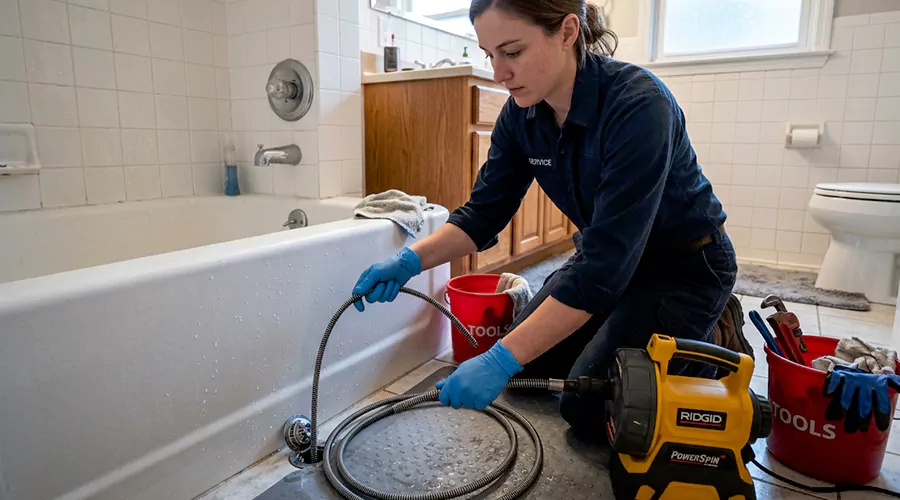
The fastest way to unclog a tub drain is to pull hair from the stopper area first. If the clog remains, seal the overflow and plunge before using a manual snake through the overflow opening. Professional drain clearing typically costs $150 to $350 in 2026. The supplied keyword unclog tub drain has 5,000 average monthly searches. This guide focuses on the shortest safe clearing sequence. Each step becomes more involved only when the previous one fails.
What Tools Do You Need to Unclog a Tub Drain?
Most tub clogs need only simple hand tools. The exact tools depend on the stopper design and how deep the obstruction sits.
- Useful items include rubber gloves.
- A screwdriver may be needed for the overflow plate.
- A plastic hair tool can reach beneath the stopper.
- A flat cup plunger handles deeper soft clogs.
- A manual hand auger reaches farther into the waste line.
- Manual drain snakes can cost under $25.
Avoid starting with powered equipment. Household bathtub clogs rarely need that much force.
What Should You Do With Standing Water?
Remove most standing water before trying to reach the drain. This gives you better visibility and limits splashing during tool use.
- Use a bucket or small container.
- Leave a little water if you plan to plunge.
- Wear gloves.
- Keep electrical devices away from the tub.
- Do not add chemicals when the drain is completely stopped.
If drain cleaner has already been used, avoid snaking until the chemical hazard has been addressed. Standing chemical water can splash during mechanical work.
Step 1: Remove the Stopper
A tub stopper can hide most of the material causing a local clog. Remove it according to its design.
- Lift-and-turn models usually unscrew.
- Toe-touch designs use a different release.
- Trip-lever systems connect through the overflow plate.
- Do not force a mechanism you do not recognize.
The supplied keyword tub drains covers several stopper styles and drain assemblies. Current fixture guidance recommends identifying the stopper before attempting removal. Place removed screws somewhere safe. A dropped screw can become the next drain obstruction.
Step 2: Pull Out the Hair
Inspect the drain opening once the stopper is out.
- Grab visible hair with gloved fingers.
- Use a plastic barbed strip for material several inches deeper.
- Insert the tool carefully.
- Rotate it slightly.
- Pull straight upward.
- Discard the debris.
- Repeat until the tool comes back mostly clean.
Current bathtub guidance shows that many slow tub drains are caused by hair close to the stopper. Test with water. Stop here if normal drainage returns.
Step 3: Plunge With the Overflow Sealed
A bathtub overflow provides an escape route for plunging pressure. Covering it creates a stronger seal.
- Place a wet cloth over the overflow.
- Add enough water to cover the plunger rim.
- Center the plunger over the drain.
- Push and pull 15 to 30 times.
- Keep the cup sealed.
- Remove the plunger.
- Watch the water.
A successful attempt often produces a sudden drop. This method is specifically recommended for bathtub clogs because the overflow must be sealed.
Step 4: Snake Through the Overflow
When plunging does not clear the clogged tub drain, remove the overflow plate and use a manual auger.
- The overflow route is usually straighter.
- The bottom drain can introduce sharp turns that make the cable harder to control.
- Feed the cable slowly.
- Advance until resistance appears.
- Lock the cable.
- Rotate the drum.
- Push another short section.
- Retract carefully.
- Clean the cable.
- Repeat if drainage improves but remains slow.
Do not mistake every pipe bend for a clog. Controlled pressure matters more than strength.
How Long Should You Work the Snake?
A bathtub hand auger often needs more than one pass because hair can wrap around several sections of the cable. Current 2026 guidance notes that bathtub snake work commonly takes about 15 to 45 minutes.
- Pull the cable out after each meaningful resistance point.
- Clean it.
- Test the water.
- Repeat if needed.
- Stop when the cable moves normally and water drains freely.
Do not spend hours forcing the same hard stop. That pattern can mean the obstruction sits beyond household-tool reach.
What Should You Do After the Drain Opens?
Run water long enough to prove that normal flow has returned.
- Start at low flow.
- Increase to normal faucet flow.
- Continue for several minutes.
- Watch for pooling.
- Stop the water.
- Check how quickly the tub clears.
- Reinstall the stopper.
- Test it in both open and closed positions.
- Inspect the overflow plate for correct seating.
The drain should work normally with all components reassembled.
When Should You Call a Professional?
Professional clearing makes sense when the tub remains blocked after a reasonable sequence of hair removal, plunging and manual snaking. A widespread backup also points away from a simple fixture clog.
Professional drain clearing costs around $150 to $350 in 2026. Full bathtub or shower drain replacement runs from $500 to $1,020 when the drain components themselves have failed.
Seek professional diagnosis when:
- Multiple fixtures back up.
- Sewage enters the tub.
- The hand snake cannot clear the line.
- Water leaks below the bathtub.
- The blockage quickly returns.
- The drain assembly is damaged.
Do not keep increasing tool force when the symptom points toward a larger problem.
How Can You Keep the Tub Drain Open?
A hair screen is one of the simplest prevention tools.
- Clean it after regular use.
- Pull hair from the stopper.
- Wash residue from the drain cover.
- Notice changes in drainage speed.
- Clear early buildup.
- Keep small objects away from an uncovered drain.
A few minutes of regular cleaning costs much less than professional drain service. The goal is to stop hair before it enters the waste line.
Conclusion
To unclog a tub drain, work in a fixed order. Remove the stopper and pull reachable hair first. Seal the overflow and plunge next. Use a manual auger through the overflow for deeper buildup. Test the drain after every step and stop when normal flow returns. If other fixtures also back up or the clog repeatedly returns, deeper diagnosis may be needed. Clean the stopper this week before more hair reaches the pipe.
Frequently Asked Questions
Should I snake through the overflow or bottom drain?
The overflow is often easier because it provides a straighter route toward the tub trap.
Can I plunge a tub without sealing the overflow?
You can try but much of the pressure may escape. Sealing the overflow generally produces better suction.
Why is my drain still slow after pulling hair?
More material may remain deeper in the trap. Plunging or a hand auger can reach farther.
Can I use a toilet plunger on a bathtub?
A flat cup sink-style plunger is better suited to the flat surface around a bathtub drain.
Why does my tub keep clogging?
Hair may still be entering the drain or part of an older obstruction may remain farther downstream.